


18 Mar Interoperability in 2026: Progress, Gaps, and What It Means for Closing Care Gaps
By Mark Coetzer, VP of Business Development at IMAT Solutions
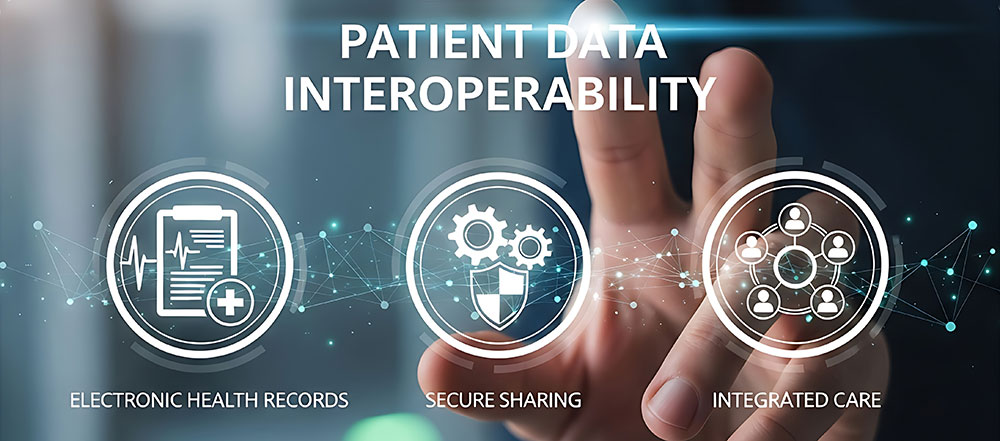
Healthcare interoperability is advancing in 2026, driven by FHIR adoption, CMS initiatives, and increased data exchange across networks. However, data quality, fragmentation, and inconsistent EHR structured data implementation continue to limit its impact. As a result, many organizations still struggle to close care gaps and act on insights in real time. The organizations that succeed will be those that move beyond data exchange to data normalization and validation, creating a trusted foundation for quality reporting, analytics, and proactive care management.
Interoperability Is Advancing. But Not Solved
Interoperability has long been a priority across healthcare, and recent progress shows the industry is moving in the right direction.
At HIMSS 2026, leaders pointed to meaningful gains driven by FHIR adoption, CMS interoperability initiatives, and growing participation in national data exchange frameworks. More organizations are exchanging data than ever before, and interoperability is increasingly viewed as a strategic priority rather than a technical challenge. But progress does not equal resolution.
Despite these advancements, most organizations still struggle to turn data exchange into actionable insight. Interoperability may be improving on paper, but its impact at the point of care remains inconsistent.
The Reality: Data Exchange Does Not Equal Usable Data
One of the clearest themes coming out of HIMSS is that interoperability alone does not solve the underlying problem.
Data may be moving more freely between systems, but it is often incomplete, inconsistent, or not structured in a way that supports clinical decision making or quality reporting.
Variability in how FHIR and CCDA standards are implemented across EHR vendors continues to create friction. Organizations frequently encounter missing data elements, inconsistent coding, duplicate patient records, and critical information buried in unstructured clinical notes.
Even when data is successfully exchanged, it may not be usable. This is where many interoperability efforts stall. The industry has focused heavily on how to move data, but less on how to make that data reliable, complete, and actionable once it arrives.
Why Data Quality Is Now the Bottleneck
As interoperability matures, data quality is emerging as the primary constraint. Industry leaders at HIMSS emphasized that high-quality data must be conformant, complete, and accurate. In practice, achieving this across multiple systems and data sources is complex.
Errors can be introduced at multiple points in the data lifecycle, from how information is captured in the EHR to how it is mapped, aggregated, and exchanged. As organizations combine data from multiple sources, inconsistencies often compound rather than resolve. This has real consequences.
Poor data quality limits the effectiveness of analytics, delays care gap identification, and undermines confidence in quality reporting. It also creates significant barriers to adopting advanced capabilities such as AI and predictive modeling.
Without a trusted data foundation, interoperability cannot deliver on its promise.
Closing Care Gaps Requires More Than Connectivity
Closing care gaps remains a top priority for both payers and providers, driven by HEDIS performance, value-based care contracts, and patient outcomes.
However, as discussed in IMAT’s recent podcast, many organizations are still relying on manual chart chasing and retrospective workflows to identify and close gaps. These approaches are inefficient, expensive, and often too late to influence outcomes.
The core issue is not a lack of data. It is a lack of timely, complete, and trusted data.
To move from reactive to proactive care gap management, organizations need continuous access to normalized clinical data that can be analyzed in real time. This requires more than interoperability. It requires a data infrastructure that can ingest, reconcile, and validate data across sources.
How IMAT Turns Interoperability into Actionable Insight
IMAT Solutions focuses on what comes after data exchange. Our IMAT Intelligence platform aggregates clinical, claims, laboratory, pharmacy, and social determinants of health data across disparate systems. These data streams are normalized into a consistent structure, creating a single, trusted view of the patient.
This enables organizations to move beyond fragmented data and begin acting on insights.
With IMAT, organizations can:
• Identify care gaps at the patient level in real time.
• Validate numerator and denominator performance before submission.
• Eliminate duplicate records through advanced patient matching.
• Surface documentation gaps that impact quality measures and risk adjustment.
• Monitor performance continuously rather than at the end of the reporting cycle.
Instead of relying on retrospective chart reviews, organizations can manage care gaps proactively throughout the year.
From Interoperability to Results
The industry has made real progress on interoperability. Data is moving more freely, standards are maturing, and regulatory momentum continues to build. The next phase is about the results that can be achieved by using clean, complete, and current patient data.
Organizations must shift focus from simply exchanging data to making that data usable, trustworthy, and actionable. This requires investment in data aggregation, normalization, validation, and governance. Those that make this transition will be better positioned to improve quality performance, close care gaps, and support the next generation of digital healthcare.
Contact IMAT Solutions to learn how IMAT Intelligence can help you move from data exchange to data impact.
About the Author
Mark Coetzer is VP of Business Development at IMAT Solutions, with more than 30 years of technology experience and a decade dedicated to healthcare. He brings deep expertise in clinical data integration, interoperability, and population health, and is passionate about helping organizations build trusted data foundations for better care and smarter outcomes.
Additional Insights from Mark Coetzer:
• Why MSSP ACOs Must Rethink Data Infrastructure for APP Quality Reporting
• What Senior Quality Leaders Must Do Now to Prepare for Digital HEDIS
• Meeting the HEDIS 2030 Moment: Why Data Readiness Can No Longer Wait
• How Data Integrity Shapes Nursing Safety, Staffing, and Care Quality
• Why Trusted Health Data Is the Backbone of Modern Clinical Risk Management
• PODCAST: Why 2026 Is the Digital Tipping Point for Healthcare Data
• Healthcare IT Today: How Do I Know if My Health Data Is Bad?
• How AI Ready Data Empowers CMOs to Lead Quality, Safety, and Value at Enterprise Scale
• The Role of AI Ready Data in Strengthening Clinical Research, Predictive Modeling, and Care Quality
• Introducing the IMAT Health Data Quality Assessment
• Why AI Ready Data Drives Sustainable Quality Performance for Health Plans
• How AI-Ready Health Data Supports the Joint Commission and CHAI Guidance
• Why AI Ready Data is the Key to Hitting Population Health KPIs
• Health IT Answers: Why Data Intelligence Is the Missing Link in Healthcare Modernization
• HIT Consultant: Why Clean Data Is the Foundation for AI in Healthcare
• PODCAST: Closing Care Gaps Through Better Data – Why It’s Time to Move Beyond Chart Chasing
• PODCAST: The Need for AI Ready Data in Healthcare
Sorry, the comment form is closed at this time.